


Why Accurate Bookkeeping Matters for US Tax Preparation
Discover how organized records, reconciled balances, and complete documentation simplify federal and state tax preparation.
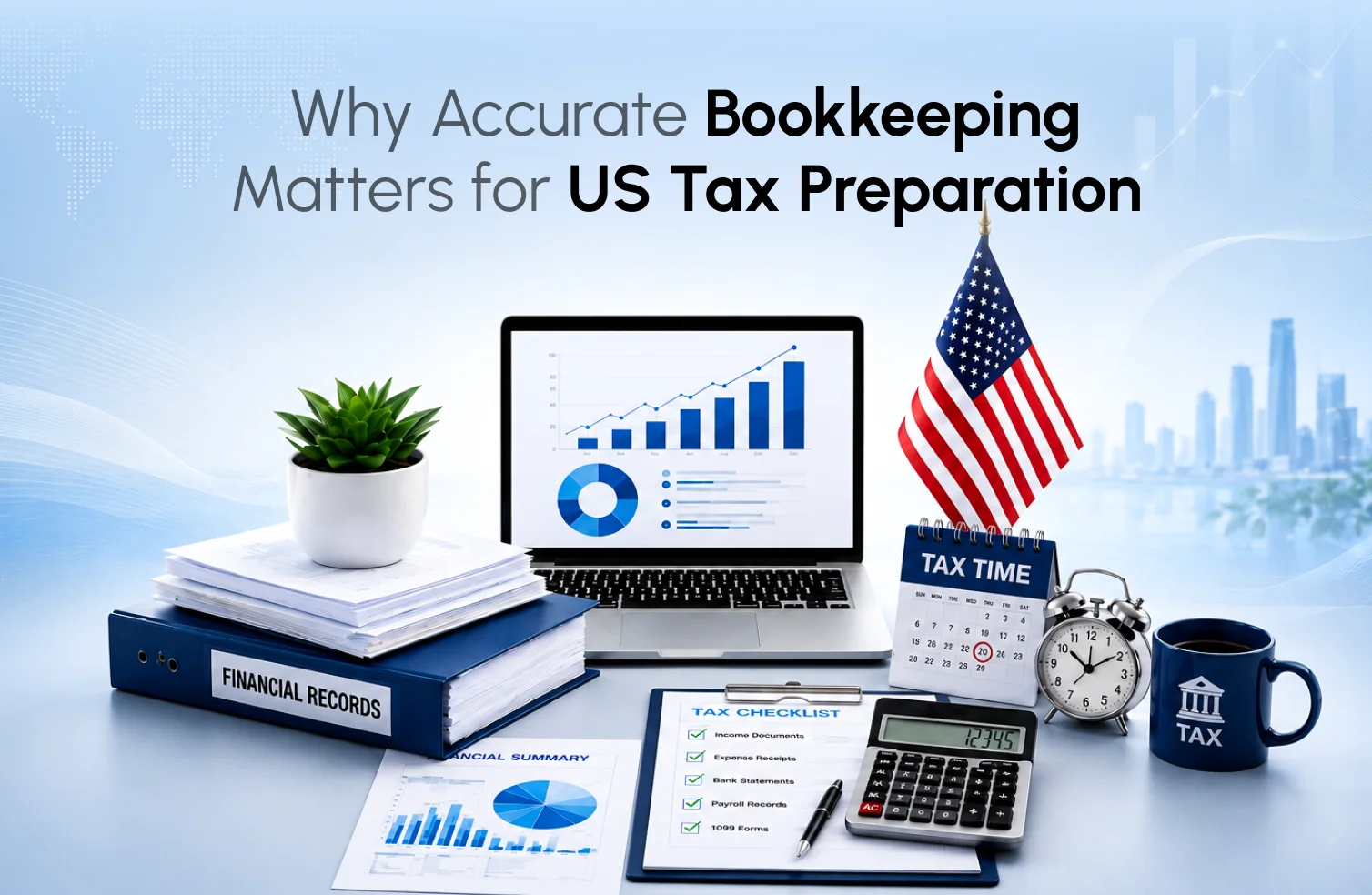
Tax preparation becomes faster, clearer, and more reliable when a business maintains accurate books throughout the year. Organized records help support reported income and expenses, identify missing information, and reduce last-minute corrections before a return is prepared.
The IRS advises taxpayers to retain records such as receipts, cancelled checks, and other documents that substantiate income, deductions, and credits reported on tax returns.
Bookkeeping and Tax Preparation Serve Different Purposes
Bookkeeping records and organizes a company’s financial activity. It includes categorizing transactions, reconciling accounts, maintaining ledgers, and tracking amounts owed by customers or payable to vendors.
Tax preparation uses those records to calculate taxable income and complete the appropriate returns and schedules. The return required depends on factors such as the taxpayer and business structure.
Common federal returns include:
- Form 1040: Used by individuals to report income, including applicable business income
- Form 1065: Used to report partnership income, deductions, gains, and losses
- Form 1120: Used by C corporations
- Form 1120-S: Used by qualifying S corporations
- Schedule K-1: Used to report a partner’s or shareholder’s share of applicable tax items
The IRS publishes the current versions and instructions for these forms through its official forms directory.
How Bookkeeping Supports Tax Preparation
It Creates a Reliable Record of Income
Businesses may receive revenue through bank transfers, cards, online payment gateways, marketplaces, and other channels. These amounts must be recorded and reconciled so reported income reflects the available financial evidence.
Missing deposits, duplicated sales, or incorrectly classified transfers can distort revenue. Regular reconciliation helps identify these issues before the tax-preparation process begins.
It Organizes Business Expenses
Expenses need consistent categorization and supporting documentation. Combining personal and business transactions, using unclear expense descriptions, or failing to retain receipts can make review more difficult.
Accurate books create a traceable connection between ledger entries and source documents. The IRS states that taxpayers may need records to substantiate income, deductions, and credits. IRS recordkeeping guidance
It Keeps Balance-Sheet Accounts Accurate
Tax preparation is not based only on revenue and expenses. Preparers may also need information about:
- Cash balances
- Loans and interest
- Fixed assets
- Inventory
- Payroll liabilities
- Owner contributions and distributions
- Accounts payable and receivable
If these balances are not reviewed, the financial statements may contain unexplained differences that must be resolved before completing the return.
It Supports Partner and Shareholder Reporting
Partnerships and S corporations may need to provide Schedules K-1 to partners or shareholders. The underlying allocations rely on complete entity-level records and the applicable tax rules.
Accurate capital accounts, ownership information, distributions, and financial activity help the tax professional prepare the relevant return and supporting schedules.
It Makes Extensions More Manageable
An extension provides additional time to file a return, but businesses still need organized records to estimate their position and complete the filing process. Form 7004 applies to automatic extensions for certain business income-tax, information, and other returns. IRS Form 7004
Keeping the books current makes it easier to determine what information is available, what remains outstanding, and what must be completed during the extension period.
Warning Signs That Your Books Are Not Tax-Ready
A business may need bookkeeping cleanup before tax preparation when:
- Bank or credit-card accounts have not been reconciled
- Transactions remain uncategorized
- Loan balances do not match lender statements
- Personal and business expenses are mixed
- Payroll liabilities have unexplained balances
- Fixed assets have not been recorded
- Accounts receivable or payable contain old entries
- Prior-year closing adjustments were not posted
- Source documents are missing
- Financial reports change without explanation
These issues do not automatically mean a return is incorrect. They indicate that the records require further review before they can reliably support tax preparation.
A Practical Tax-Ready Bookkeeping Process
1. Collect the Records
Gather bank statements, credit-card statements, payroll reports, loan statements, sales records, invoices, receipts, and prior returns.
2. Record and Categorize Transactions
Enter missing activity and assign each item to an appropriate account based on its nature and available documentation.
3. Reconcile Financial Accounts
Compare the accounting records with statements from banks, payment platforms, lenders, and other relevant sources.
4. Review the Balance Sheet
Investigate unusual, negative, duplicated, or long-outstanding balances that may indicate incomplete entries.
5. Complete the Period-End Close
Post supported adjustments and confirm that the financial statements reflect the finalized accounting period.
6. Prepare the Tax Package
Provide the tax preparer with finalized reports, supporting schedules, ownership information, payroll records, and requested documents.
Maintain Tax-Ready Books Throughout the Year
Waiting until filing season to correct an entire year of records increases the amount of information that must be reviewed at once. Monthly bookkeeping distributes this work across the year and allows discrepancies to be investigated while documents remain accessible.
Fine Accounts helps US businesses connect recurring bookkeeping with payroll accounting, financial reporting, and tax-preparation support. The objective is to maintain dependable records that can be reviewed and used for the applicable federal and state requirements.
Build Tax Preparation on Better Records
Accurate bookkeeping does not replace professional tax preparation. It provides the financial foundation required to prepare returns with greater clarity and supporting documentation.
In this article